Serving Moreno Valley, CA and surrounding areas.(951) 647-5520
Moreno Valley Concrete Pro

Slab Foundation Building in Moreno Valley, CA, Anchored Against Expansive Clay

Moreno Valley Concrete Pro pours slab foundations with perimeter footings and crushed base to resist Moreno Valley clay heave. Every estimate is measured and written on site

Google reviewsFacebook reviewsBetter Business Bureau reviews5.0 Stars Rated by our customers · Google, Facebook and the BBB
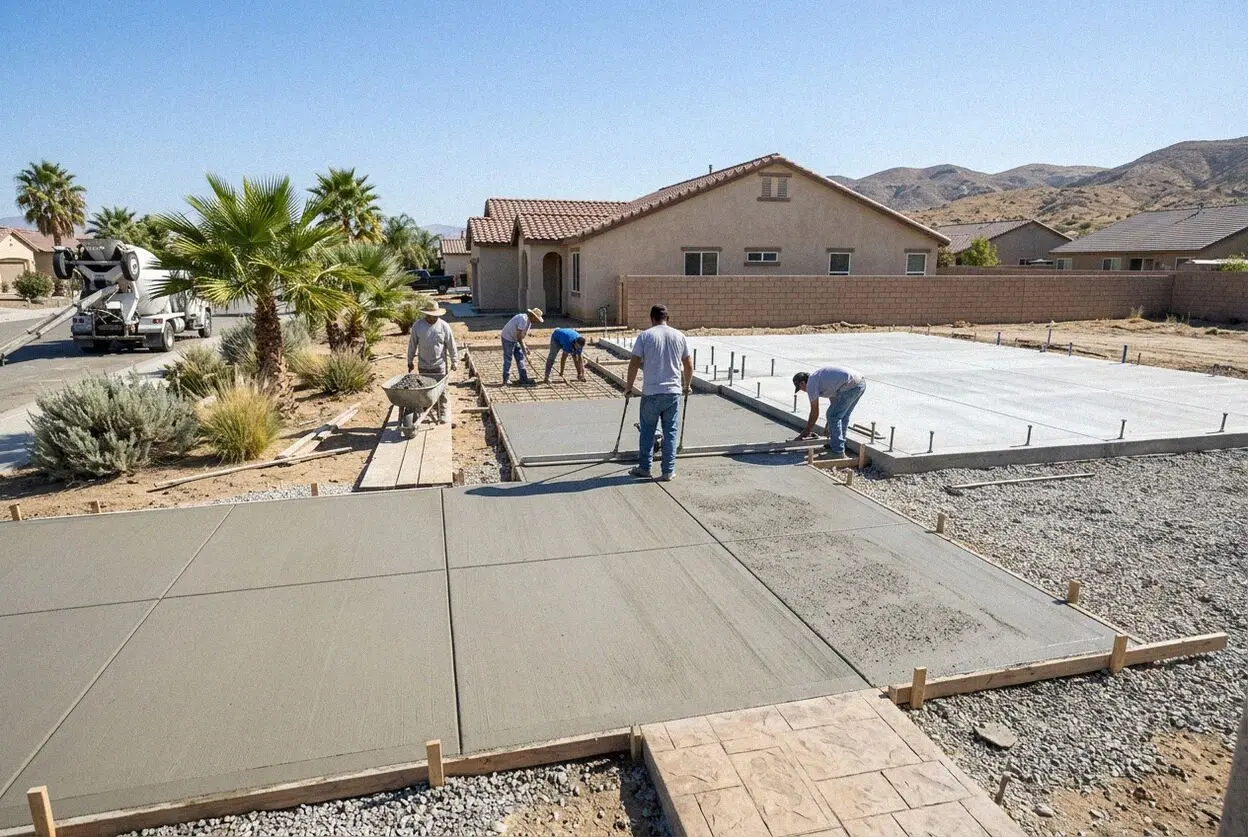
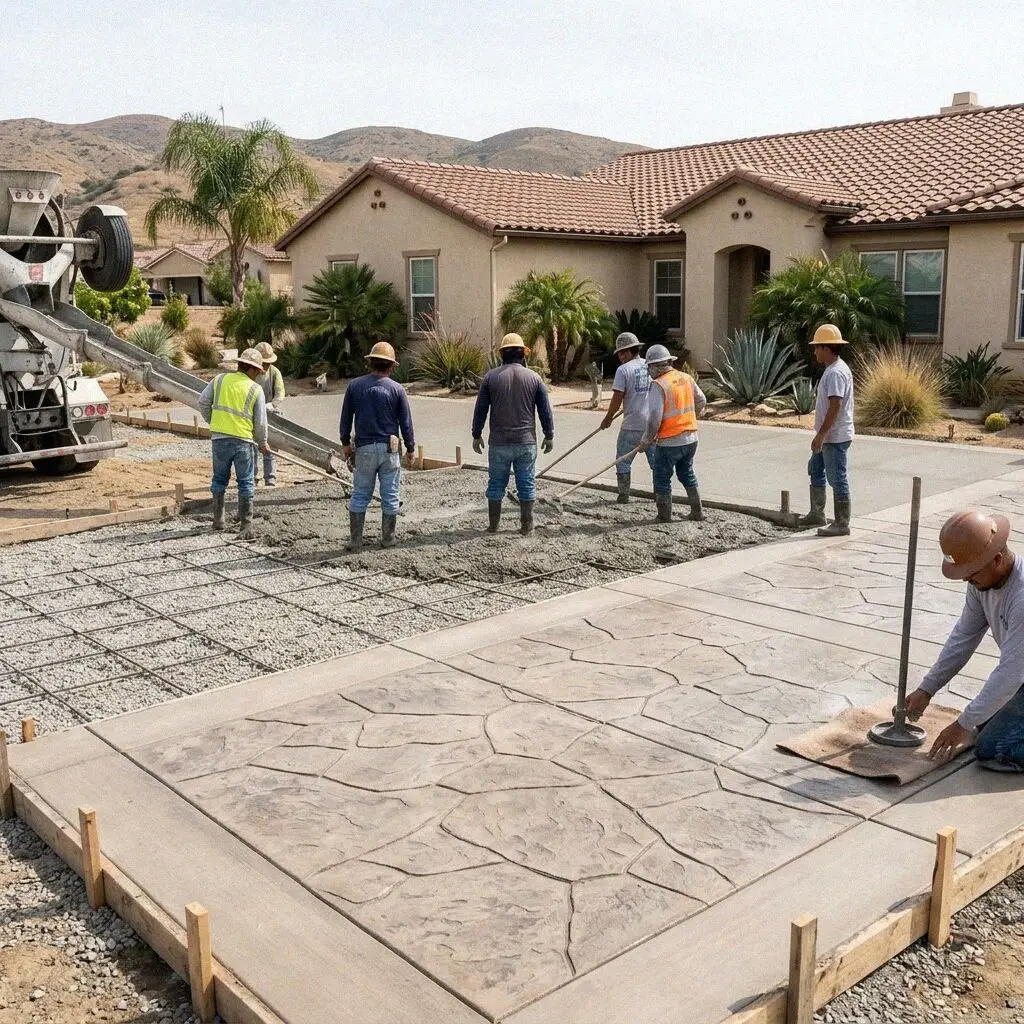
Pouring a concrete slab foundation for an addition in Moreno Valley
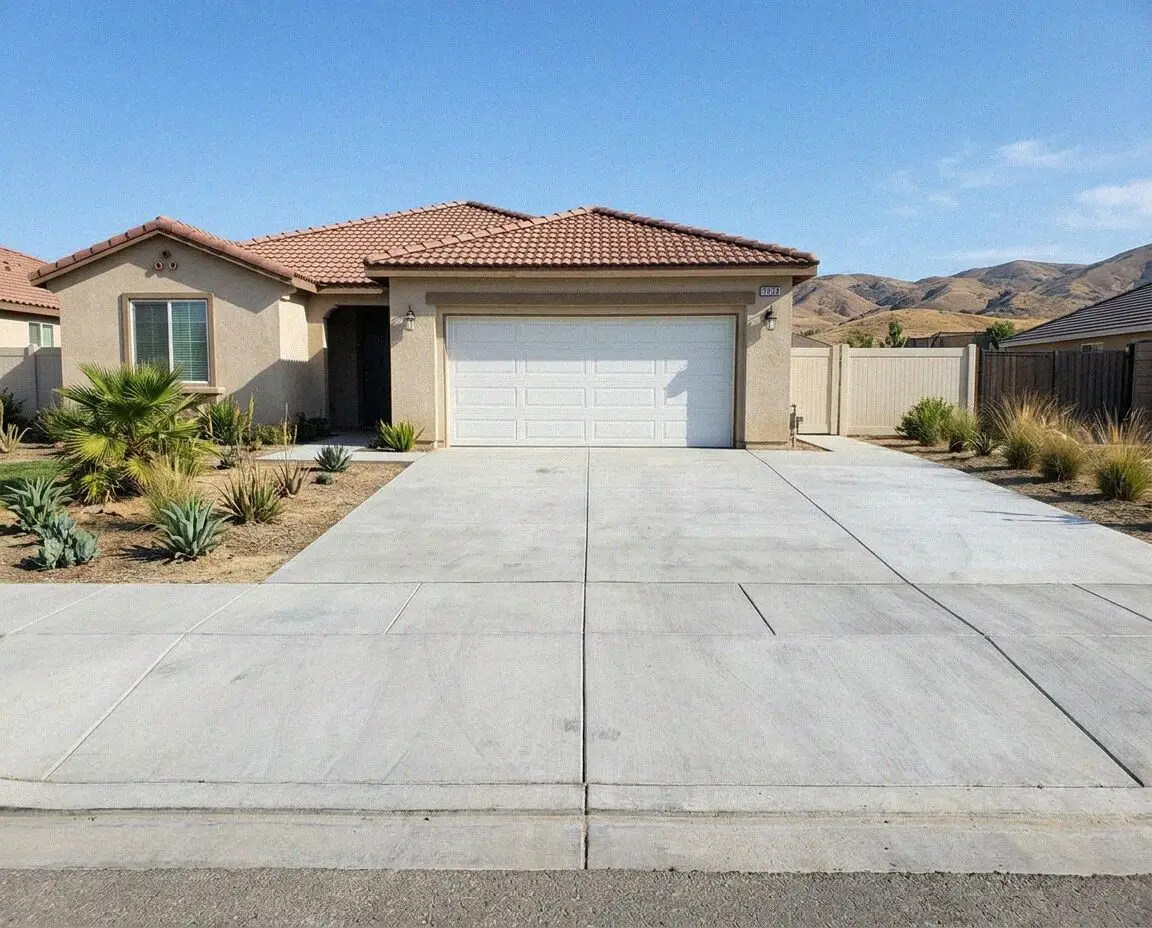
Finished residential concrete slab foundation cured in Moreno Valley

Trade Standard

Building a Solid Slab on a Moreno Valley Lot

Expansive clay subgrades across Moreno Valley swell during winter rains and shrink under dry summer heat. Slabs poured directly over native earth without deep perimeter footings crack as the perimeter settles unevenly. Terrence Boyd brings 12 years of trade experience before opening in 2022 to address these ground shifts. Data from the USDA Web Soil Survey confirms local soil plasticity requires mechanical stabilization before any pour.

Every residential structural pad requires stable bearing capacity to carry framing and dead loads. When building a foundation slab, our crew excavates deepened perimeter grade beams that anchor below the seasonal moisture line. Moreno Valley Concrete Pro excavates footings down to firm native earth and places steel rebar grids tied on chairs. This reinforcement holds the structural perimeter square while interior concrete cures to 3000 PSI compressive strength.

Proper subbase preparation separates a durable slab from one that heaves within a single season. The crew installs a continuous vapor retarder beneath the pour to block rising groundwater moisture that stains interior floor coverings. Under our CSLB C-8 license, every structural foundation is formed, reinforced, and poured to approved engineering plans, backed by a written workmanship guarantee against defects in how it was built.


Warning Signs

When does a Moreno Valley slab need replacement?

Doors sticking in frames

Doors that bind against frames signal uneven settlement beneath the building slab. When native soils compress, one section of the foundation drops while another stays pinned. Ignoring this structural shift allows framing to warp and interior drywall seams to fracture.

Clay soil perimeter heave

Moreno Valley experiences dry summer temperatures above 100 degrees that shrink clay subgrades away from slab edges. Winter runoff rehydrates the clay rapidly, lifting perimeters while the center remains stationary. This seasonal cycle shears footings within 5 to 7 years.

Branching hairline cracks

Hairline cracks branching across the slab look purely cosmetic but indicate severe subbase failure beneath. Surface moisture seeps through these hairline fissures, washing away compacted fines underneath. Within 12 months, unsupported concrete panels crack into uneven blocks.

Separating exterior walls

Gaps forming between the concrete perimeter and exterior siding create an immediate structural hazard. Delaying repairs allows moisture and pests into the wall cavity, rotting sill plates over 3 to 6 months. Remediation costs escalate rapidly once structural framing shifts.

Scope Details

What Every Moreno Valley Slab Build Includes

Engineered foundation slabs require systematic structural defense against shifting inland soils. Every stage of our preparation stabilizes the ground and seals out moisture so the structural pad remains level over decades.

Site clearing and dig

We excavate organic topsoil and old concrete to reach stable subsoil, hauling all debris off site in 1 day.

Subgrade proof rolling

We test subgrade density across the footprint, excavating soft clay pockets down to solid bearing earth.

Compacted aggregate base

A 4 inch layer of crushed base rock is compacted to 95 percent relative density to stop soil movement.

Engineered concrete mix

We pour 3000 PSI ready mix concrete with low water content to resist shrinkage cracking under desert heat.

Deepened edge footings

Perimeter footings are dug 12 inches deep and tied with steel cages to prevent edge shearing under load.

Vapor barrier and steel

A 15 mil vapor barrier and grid of grade 60 rebar on chairs prevent rising water and structural deflection.

Site wash and cleanup

Forms are stripped, ground edges backfilled, and all excess concrete and nails hauled away before handoff.

Workmanship protection

Every pour includes a written workmanship guarantee against defects in how it was built to protect your project against installation flaws.

Build Options

Moreno Valley Foundation Slab Options Compared

Foundation slabs must match the structural load of your building and the clay movement of your specific parcel. Choosing the correct footing depth and reinforcement system prevents foundation settlement over decades.

OptionLifespanPrimary UseMaintenanceBuild Time
Monolithic Slab50 or more yearsSingle family additions and garagesInspect perimeter every 3 years3 to 4 working days
Stem Wall Slab60 to 75 yearsSloped parcels and heavy framingCheck exterior vents every 2 years5 to 6 working days
Thickened Edge Slab50 or more yearsSingle story homes from 1980sSeal surface joints every 5 years3 to 5 working days
Grade Beam Slab50 to 70 yearsExpansive clay and tight accessVerify drainage slope twice a year4 to 6 working days

Our on site consultation evaluates your lot slope and soil condition to determine the exact engineering profile required for your structure.

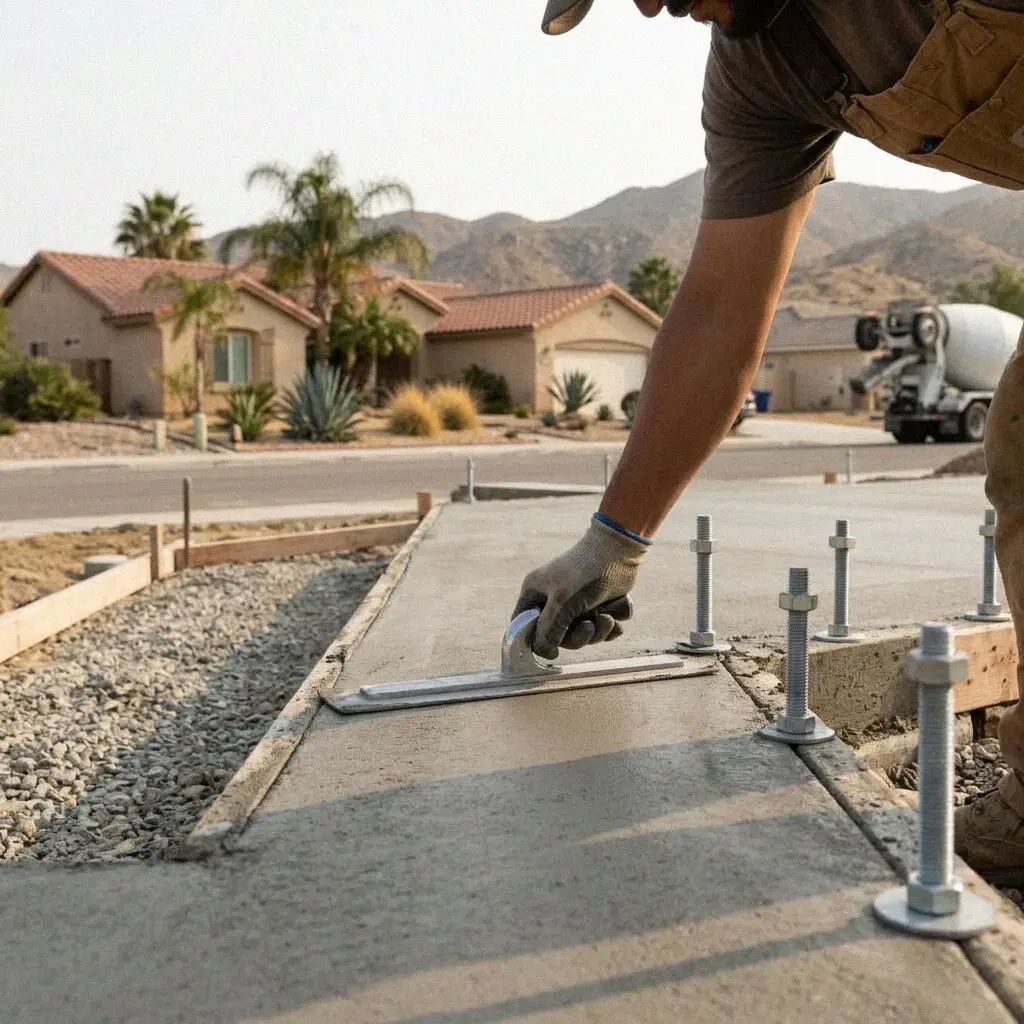
Compacted base and trench footings for a Moreno Valley slab build

Local Ground

Subgrade Challenges on Moreno Valley Pads

Summer temperatures regularly exceed 100 degrees across Moreno Valley, while local clay subgrades expand up to 10 percent during winter precipitation cycles.

Moreno Valley sits within Riverside County, where alluvial plains meet steep granitic hills. With owner occupied homes at 60.5 percent across the city, long term structural stability protects primary family assets. The top layer of soil here dries rapidly under desert winds, creating shrinkage voids beneath exterior footing perimeters. When seasonal winter moisture enters those voids, unreinforced slab edges lift and snap under the upward pressure of the expanding soil bed.

Guidelines from the Portland Cement Association recommend rigorous moisture management and appropriate curing compounds to preserve hydration in arid environments. In the Inland Empire, our team pours foundation slabs early in the morning before daytime temperatures accelerate water evaporation. We place poly sheeting over compacted base aggregate and apply continuous curing seals so the structural concrete reaches full designed strength.

Work Sequence

Building a Foundation Slab in Moreno Valley

Our structured construction sequence verifies subgrade compaction and structural steel placement before a single yard of ready mix concrete is discharged into your building pad forms.

1

Site assessment and measure

We measure the building footprint, check elevations with a laser level, and record soil moisture conditions across the lot.

2

Permitting and schedule

We finalize engineering details, pull required permits from the local building division, and confirm the project start calendar.

3

Excavation and base proofing

Day one clears turf and loose topsoil to the dump, trenches perimeter footings, and compacts subgrade to 95 percent density.

4

Forming and concrete pour

The crew installs vapor wrap, ties rebar, and pours 3000 PSI concrete under direct on site supervision of Terrence Boyd.

5

Curing and final review

We strip form boards, haul all scrap materials away, walk the slab with you, and deliver your signed guarantee documentation.

Pricing Factors

What Shapes a Moreno Valley Slab Foundation Quote

Foundation pricing reflects the physical engineering requirements of your parcel rather than flat rates. Structural footing depth, site slope, access constraints, and reinforcement tonnage determine the final investment.

Single family additions

Tying into an existing home foundation requires drilling dowel pins into existing footings and matching subbase depths.

Duplex and accessory units

Multiple plumbing lines and load bearing interior footings increase trenching time and subgrade vapor membrane detailing.

Steep hillside parcels

Sloped building pads require stepped footings, concrete pumping equipment, and extra retaining formwork to hold elevation.

High early strength mix

Accelerated cure additives and fiber reinforcement require on site inspection of lot sun exposure and wind patterns.

We calculate your firm proposal after measuring site elevations, testing subsoil stability, and reviewing your architectural plans. (951) 647-5520 or send us a message.

Schedule Your On Site Foundation Measure

Accurate foundation quotes demand exact on site elevation readings and soil evaluation. Contact our crew today to book an in person assessment and receive a firm written estimate for your building foundation.

Request a Free Estimate

Written on site · No obligation

By submitting, you agree to our disclosure and consent terms, including being contacted by Moreno Valley Concrete Pro.

Client Reviews

Recent Foundation Projects in Moreno Valley

Homeowners and builders across the city rely on our structural concrete work to hold true through seasonal ground movement and regional weather extremes.

Google review

“Terrence and his crew excavated and poured a 600 square foot slab foundation for our detached garage in 4 days. They dug the perimeter footings 12 inches into our hard clay yard and placed 4 inches of crushed stone. The pad cured completely level with zero cracking.”

M. Henderson, Moreno ValleySlab Foundation · Google · 2026
Google review

“Our property has a tight side yard, but the crew brought in specialized compact equipment to dig our 850 square foot addition foundation. They tied grade 60 steel rebar throughout the footings and finished the entire structural pour within 5 days without any delays.”

J. Okafor, Moreno ValleyFoundation Slab Building · Google · 2026
Facebook review

“After pouring our 1100 square foot building slab in 4 days, Terrence did a full walk through to check edge dimensions and elevation points. He supplied our written workmanship guarantee and answered every question we had about the cure timeline before framing began.”

S. Whitfield, Moreno ValleySlab Foundation Building · Facebook · 2026

Common Inquiries

Slab Foundation Questions Asked in Moreno Valley

Clear answers on permits, engineering specifications, curing schedules, and workmanship protections for foundation construction in our community.

(951) 647-5520
  • What factors determine the cost of a slab foundation?

    Your foundation estimate depends on square footage, excavation depth, subgrade soil stabilization, and steel rebar volume. Sites with expansive clay require deeper perimeter footings and extra crushed rock aggregate to establish a solid bearing pad. Lot slope also affects price by requiring stepped forms and specialized concrete pumping equipment.

  • How long does building a foundation slab take here?

    A typical residential slab foundation takes 3 to 5 working days from initial excavation to final finishing. Difficult backyard access, buried granite boulders, or unexpected utility rerouting can stretch site preparation by 1 or 2 days. The new concrete pad must cure undisturbed for 7 days before framing begins and reaches its full design strength at 28 days.

  • What is included in a foundation slab build?

    Every project includes ground clearing, footing excavation, subgrade compaction, crushed rock base, steel rebar reinforcement, and concrete placement. Excavation spoil hauling and a 15 mil puncture resistant vapor barrier are included as standard line items on your estimate rather than billed as surprise extras. The site is cleaned and left ready for framing.

  • Do I need a building permit for a foundation slab?

    Yes, structural foundation slabs require a building permit approved by the local building safety division before work begins. Moreno Valley Concrete Pro submits engineering plans and pulls the required building permits on your behalf. Minor detached flatwork under 120 square feet may be exempt, but retaining walls over 4 feet tall always require separate structural permits.

  • What season is most suitable for pouring a slab?

    Late autumn and early spring offer ideal weather conditions with moderate temperatures between 65 and 75 degrees. Summer pours face afternoon heat exceeding 100 degrees, requiring dawn scheduling, continuous surface misting, and chemical retarding admixtures to avoid rapid water loss. Pouring during peak summer heat adds extra crew hours to keep the curing slab damp.

  • What guarantee covers my new foundation slab?

    Your foundation slab comes with a written workmanship guarantee against defects in how it was built. Ready mix concrete suppliers provide material batch certifications confirming 3000 PSI strength ratings. The guarantee does not cover damage caused by severe earthquakes, undocumented drainage alterations made after completion, or unmanaged surface runoff directed against the perimeter.

  • Which concrete materials and equipment do you utilize?

    We pour certified ready mix concrete sourced from local commercial batch plants, utilizing grade 60 deformed rebar and Stego Wrap vapor barriers. For high load applications, we add synthetic macro fibers and water reducing plasticizers to increase crack resistance. Excavation is completed with compact rubber track excavators designed to minimize turf disturbance.

  • Do I need to be present while the foundation is poured?

    No, you do not need to remain on site during construction as long as our crew has access to water and the building area. Before we arrive, clear personal vehicles from the driveway and ensure side gates are unlocked. Once concrete is finished, keep pets and foot traffic off the slab for 48 hours. You can reach Terrence Boyd directly if questions arise during the day.

Service Coverage

Slab Foundations in Moreno Valley and Nearby

Our crews pour structural foundation slabs engineered for the expansive clay formations and hot summer conditions found throughout our regional communities.

Show All Areas We Serve

Book Your Moreno Valley Foundation Inspection

Our team inspects your lot grade, tests clay subgrade conditions, and measures perimeter footing depths on site. Reach out today to receive a complete proposal returned within 1 business day.