Serving Moreno Valley, CA and surrounding areas.(951) 647-5520
Moreno Valley Concrete Pro

Foundation Installation in Moreno Valley, CA, Anchoring Footings in Clay Soils

Moreno Valley Concrete Pro pours monolithic foundations with 18 inch perimeter footings to stop seasonal clay heave. Every estimate is measured and written on site

Google reviewsFacebook reviewsBetter Business Bureau reviews5.0 Stars Rated by our customers · Google, Facebook and the BBB
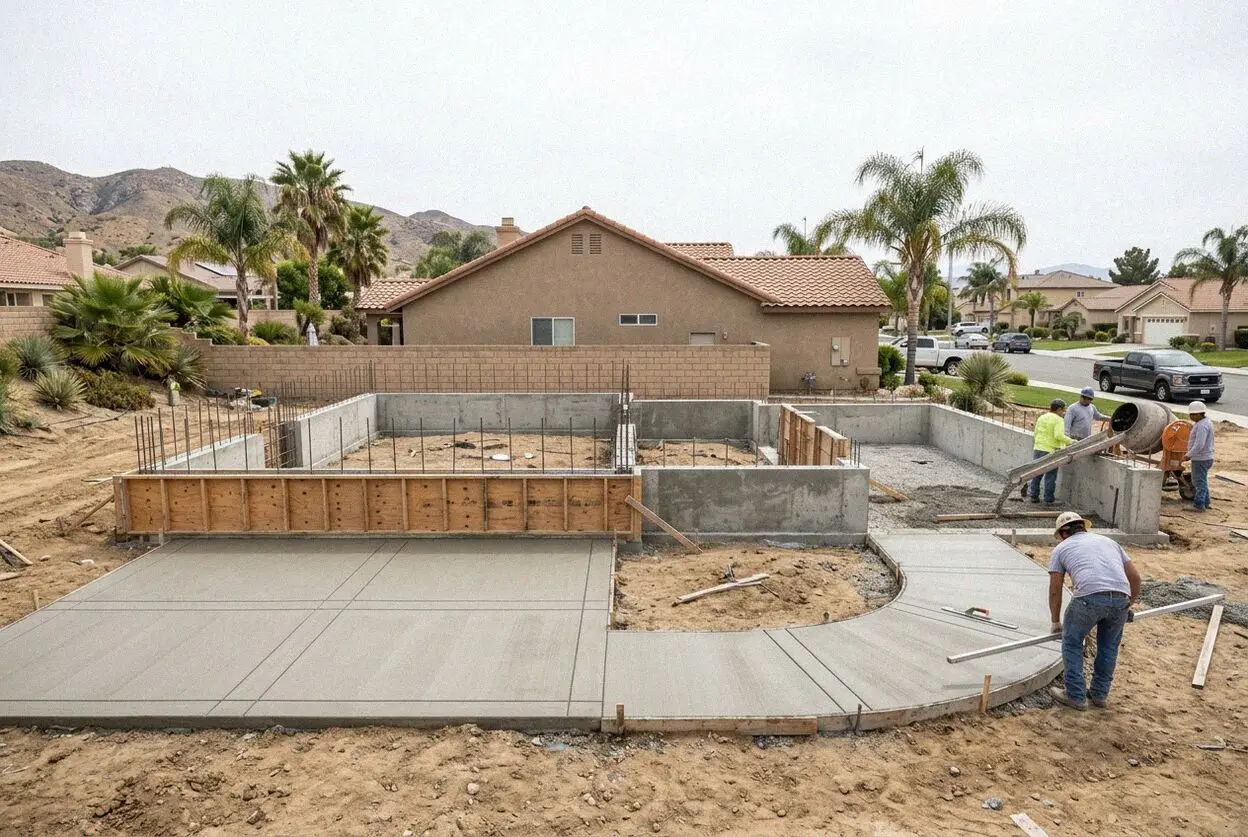
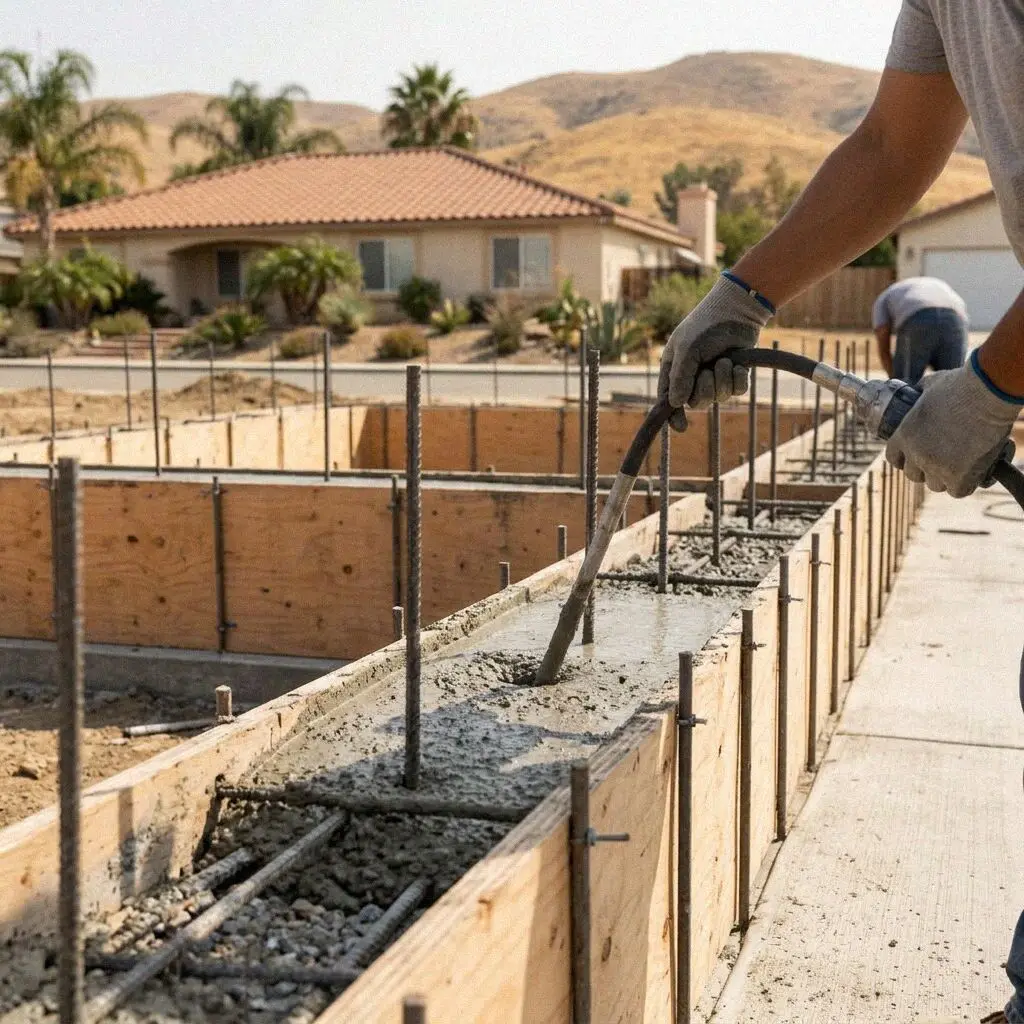
Forming a reinforced concrete foundation footing in Moreno Valley
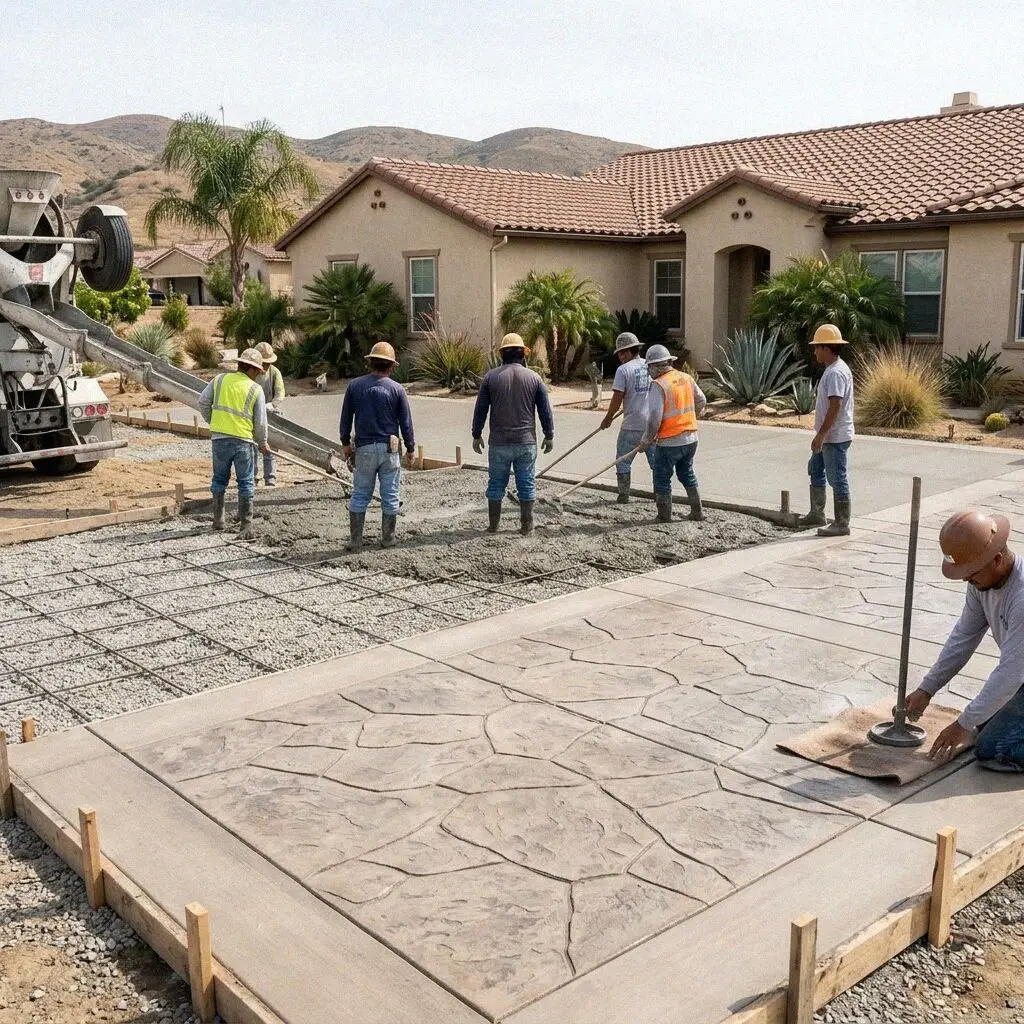
Poured concrete foundation slab curing on a Moreno Valley home site

Structural Slabs

Pouring a Foundation on a Moreno Valley Lot

Every foundation slab poured in Moreno Valley rests on native soils that expand when winter rains arrive and shrink under summer heat. Data from the USDA Web Soil Survey shows heavy clay loam across residential tracts east of Perris Boulevard. When a foundation lacks deepened perimeter beams, this seasonal movement cracks stem walls and causes interior drywall joints to pull apart across the living space.

Terrence Boyd spent 12 years working concrete crews before founding the company in 2022, establishing build standards specifically tailored to Riverside County ground conditions. Each pour begins with mechanical soil compaction and laser grading before forms are set. We anchor grade 60 steel rebar on three inch chairs inside trenches excavated 18 inches below grade, ensuring the perimeter footing bears below the active moisture zone.

Operating under California Contractors State License Board license CSLB C-8 with liability insurance on every job, the crew pours structural pads designed for heavy residential framing. We place a 10 mil vapor barrier directly over compacted base rock to block rising ground dampness before placing 4,000 PSI ready-mix concrete. Every foundation carries a written workmanship guarantee against defects in how it was built.


Warning Signs

When is a Moreno Valley foundation past repairing?

Sticking Doors and Windows

Interior doors that suddenly bind in their doorframes or rub against flooring indicate differential settlement in the slab beneath. As the perimeter footing shifts downward unevenly, the framing loses square. Ignoring sticky doors allows the framing tension to crack ceiling corners.

Summer Soil Shrinkage Cracks

Moreno Valley summers routinely reach 105 degrees, baking topsoil and pulling moisture from beneath shallow foundation edges. Slabs poured without deepened 18 inch perimeter footings lose support along their outer edges, creating diagonal fracture lines across exterior stem walls.

Hairline Slab Fractures

Hairline cracks running across an exposed slab often get dismissed as cosmetic drying lines. When moisture migrates through unsealed subgrade fissures over 12 months, interior steel reinforcement corrodes and expands, splitting the concrete apart from the inside and lifting floor tiles.

Plumbing Separation Under Slab

Differential slab movement bends rigid drain pipes routed beneath the foundation floor. Over an interval of 6 months, settling concrete shears supply or waste connections, discharging water beneath the footings and accelerating subgrade washouts that multiply total rebuild costs.

Build Standards

What Goes Into a Moreno Valley Foundation

Every structural slab must withstand active soil pressures and severe seasonal heat without settling. We build each component to verified structural specifications so framing stays square for the entire life of the building.

Old Slab Demolition

Hydraulic breakers remove old failing concrete, clearing the footprint down to clean grade before any new trenching starts.

Subgrade Soil Testing

The crew inspects underlying soil density, excavating pockets of uncompacted loam until stable native ground is reached.

Compacted Aggregate Base

Four inches of crushed Class 2 aggregate are mechanically tamped to create a solid non-expansive platform under the pad.

4000 PSI Concrete Mix

We pour 4,000 PSI ready-mix formulated for structural foundations, offering fiber reinforcement for higher impact resistance.

Deep Perimeter Footings

Perimeter trenches are dug 18 inches deep and 12 inches wide to lock the foundation below the active seasonal dry line.

Steel Rebar Grid Cages

Grade 60 half inch steel rebar is tied on 18 inch centers, elevating tensile capacity to stop structural cracking.

Site Clean and Form Strip

Wood forming stakes are pulled, excess concrete spoils are hauled away, and the perimeter is raked clean to grade.

Workmanship Guarantee

Every foundation includes a written workmanship guarantee against defects in how it was built across all structural components.

Foundation Types

Four Foundation Systems for Moreno Valley

Selecting the right foundation design depends on lot slope, expected structural load, and native soil expansion. Here is how four primary residential systems perform under Moreno Valley building conditions over decades.

OptionLifespanRecommended ForMaintenanceCure Duration
Monolithic Slab60 to 80 yearsFlat parcels and tract homesInspect perimeter yearly28 days to full cure
Post Tension Slab80 to 100 yearsActive clay soils and larger budgetsCheck tendon anchors every 5 years28 days to full cure
Stem Wall and Footings50 to 75 years on firm groundSloped lots and older midcentury homesInspect crawlspace vents every 2 years28 days to full cure
Grade Beam on Piers70 to 90 yearsSteep hillside pads and uncompacted fillInspect drainage grades every 3 years28 days to full cure

Every site requires specific soil evaluation before choosing an engineering approach. Every estimate is measured and written on site

Excavated foundation trenches prepared for rebar in Moreno Valley

Regional Ground

Why Foundations Move in Moreno Valley

Summer heat exceeding 100 degrees desiccates subgrade soils while annual winter downpours deliver over 10 inches of rain into expansive clay basins.

With owner-occupied homes at 60.5% across Moreno Valley, residential properties rely on structures that resist ground cycles. Tracts near Box Springs Mountain encounter dense alluvial clay that swells when saturated. Standard slabs without thickened edges flex under this upward pressure. Pouring continuous perimeter footings down 18 inches below grade isolates the interior living floor from exterior soil movement and keeps structural framing true over time.

Engineering guidelines from the Portland Cement Association emphasize strict moisture control during the cure phase, especially in arid desert margins. Moreno Valley afternoon winds accelerate surface evaporation, which causes shrinkage cracking if the concrete dries unevenly. We apply chemical curing compounds and maintain wet hydration blankets to ensure the cement binder hydrates fully across the entire thickness of the foundation.

Build Stages

Five Foundation Pour Stages in Moreno Valley

Every structural build requires precise coordination between ground prep, formwork inspections, and pour sequencing so concrete cures without voids or settling. Here is our job timeline.

1

Subgrade Assessment

We measure site elevations and test soil moisture across the footprint, identifying unstable fill that must be excavated.

2

Permits and Scheduling

Mix specifications are confirmed, our team files permits with the Moreno Valley Building Division, and calendar dates are set.

3

Trenching and Inspection

Perimeter footings are trenched down 18 inches, uncompacted dirt is hauled to recycling, and municipal inspectors sign forms.

4

Steel Placement and Pour

Rebar cages and vapor barriers are positioned before 4,000 PSI concrete is placed and consolidated under owner supervision.

5

Cure and Final Walkthrough

Forms are stripped, construction debris is hauled off site, and the owner reviews engineering documents during final walkthrough.

Pricing Factors

What Determines Foundation Cost in Moreno Valley

Foundation pricing varies based on subterranean soil conditions, accessibility for ready-mix trucks, and structural reinforcement details. Each job requires an individual physical assessment of the build pad.

Single Family Additions

Tying into an existing stem wall requires exploratory digging and epoxy dowels, which changes labor hours compared to open ground.

Detached ADU Foundations

Backyard accessory dwelling units often require hand carting materials through narrow side gates when pumper trucks cannot stage.

Sloped Lot Excavation

Building on stepped terrain demands stepped footing depths, extra formwork bracing, and engineered retaining stem walls.

Engineered Soil Import

When native clay fails stability checks, non-expansive fill dirt must be trucked in, calculated by cubic yardage on the site.

Accurate structural pricing requires checking ground elevation and soil density on location. Every estimate is measured and written on site (951) 647-5520 or send us a message.

Schedule a Foundation Site Assessment

A licensed concrete contractor evaluates your lot slope, checks access for ready-mix deliveries, and measures footing depths in person so your structural foundation estimate accounts for actual site conditions.

Request a Free Estimate

Written on site · No obligation

By submitting, you agree to our disclosure and consent terms, including being contacted by Moreno Valley Concrete Pro.

Client Reviews

Foundation Work Completed in Moreno Valley

Local property owners share how our structural pours handled shifting clay ground, tight backyard access, and rigorous municipal building inspections across the city.

Google review

“The crew excavated 18 inch perimeter footings for our 600 square foot room addition in Towngate. They tied every rebar run on three inch blocks and completed the pour in 3 days. The city inspector signed off the foundation on his first visit.”

M. Ramirez, Moreno ValleyFoundation Installation · Google · 2026
Google review

“Our Sunnymead Ranch property had tight side access, meaning the crew had to pipe concrete 120 feet back to the new garage slab. They set the grade beams 24 inches deep into the slope and wrapped up the entire forming and pour within 4 working days.”

J. Okafor, Moreno ValleyFoundation Installation · Google · 2026
Facebook review

“After the pour was finished, the owner walked the slab with us to measure levelness across the 40 foot pad and handed over the warranty paperwork. Two weeks later an irrigation leak tested the edge drainage, and the foundation showed zero settlement or shifting.”

S. Whitfield, Moreno ValleyFoundation Installation · Facebook · 2026

Foundation FAQ

Foundation Questions Asked in Moreno Valley

Clear answers to structural foundation questions help Moreno Valley property owners plan permits, excavation timelines, and subgrade preparation before booking.

(951) 647-5520
  • What determines the cost of a new foundation?

    Foundation estimates depend primarily on footing excavation depth, total cubic yardage of concrete, and necessary steel reinforcement tonnage. Ground slope and soil density also shift the final figure because hillside pads require stepped grade beams while clay soils demand non-expansive base rock. Pumping equipment access also alters mobilization expenses.

  • How long does foundation installation take?

    A residential foundation installation takes 4 to 6 working days from initial excavation through municipal inspection and concrete pouring. Complex sites with steep lot slopes or tight backyard access can extend digging schedules by several days. Once the pour finishes, the concrete must cure for 7 days before framing begins and 28 days before full design strength.

  • What is included in a foundation installation?

    Every build covers complete grading, formwork, steel reinforcement, ready-mix placement, and site cleanup. Two items frequently assumed to be extra expenses are included as standard line items on our written proposals, specifically vapor barrier installation across the entire interior footprint and mechanical compaction testing of the aggregate subbase before pouring concrete.

  • Do I need a permit for a new foundation build?

    Yes, every structural foundation requires an approved building permit and plan check review before work starts. We prepare structural drawings and submit permit packages directly to the Moreno Valley Building Division on Alessandro Boulevard. Municipal inspectors visit the property to verify trench depths and rebar placement prior to scheduling the concrete pour.

  • What is the optimal season for pouring a foundation?

    Spring and autumn offer the most stable conditions for foundation pours in the Inland Empire. Pouring when daytime highs stay between 65 and 80 degrees prevents rapid surface moisture loss that triggers plastic shrinkage cracks. Pouring during midsummer heat over 100 degrees requires early dawn pours, shade barriers, and continuous hydration to avoid flash sets.

  • What guarantee is provided on foundation work?

    Every structural project includes a written workmanship guarantee against defects in how it was built, backed by the ready-mix producer standard material warranty on compressive strength. Neither guarantee covers natural earth shifting from severe earthquakes, catastrophic flooding, or homeowner changes that divert roof gutters against the foundation edge and cause localized erosion.

  • Which concrete mixes and materials do you use?

    We source certified structural ready-mix from regional suppliers like Robertson's Ready Mix and Cemex, specifying 4,000 PSI mixes with mid-range water reducers. Standard builds use ASTM A615 grade 60 deformed rebar. For aggressive soils, we offer sulfate-resistant Type V cement mixes and microfiber additives that enhance tensile toughness during early curing.

  • Do I need to be present during foundation work?

    No, you do not need to stay home during the pour once property lines and utility markings are verified. Before the crew arrives, please clear side gates, move parked vehicles from the street frontage, and keep pets indoors. Keep sprinklers turned off near the excavation. If questions arise during construction, you can reach Terrence Boyd directly by phone at any point.

Service Radius

Foundations Across Moreno Valley and Beyond

We construct engineered concrete foundations for additions, new homes, and detached living units across the Inland Empire, adapting to local soil conditions.

Show All Areas We Serve

Book Your Moreno Valley Foundation Estimate

We visit your property to measure lot slope, inspect soil drainage, and calculate footing depths for your build pad. Contact us today, and we follow up within 1 business day with an itemized written on site estimate.