Serving Moreno Valley, CA and surrounding areas.(951) 647-5520
Moreno Valley Concrete Pro

Concrete Patio Construction in Moreno Valley, CA, Built for Shifting Clay Ground

Moreno Valley Concrete Pro pours patios over four inches of compacted base to withstand shifting clay ground. Every estimate is measured and written on site

Google reviewsFacebook reviewsBetter Business Bureau reviews5.0 Stars Rated by our customers · Google, Facebook and the BBB
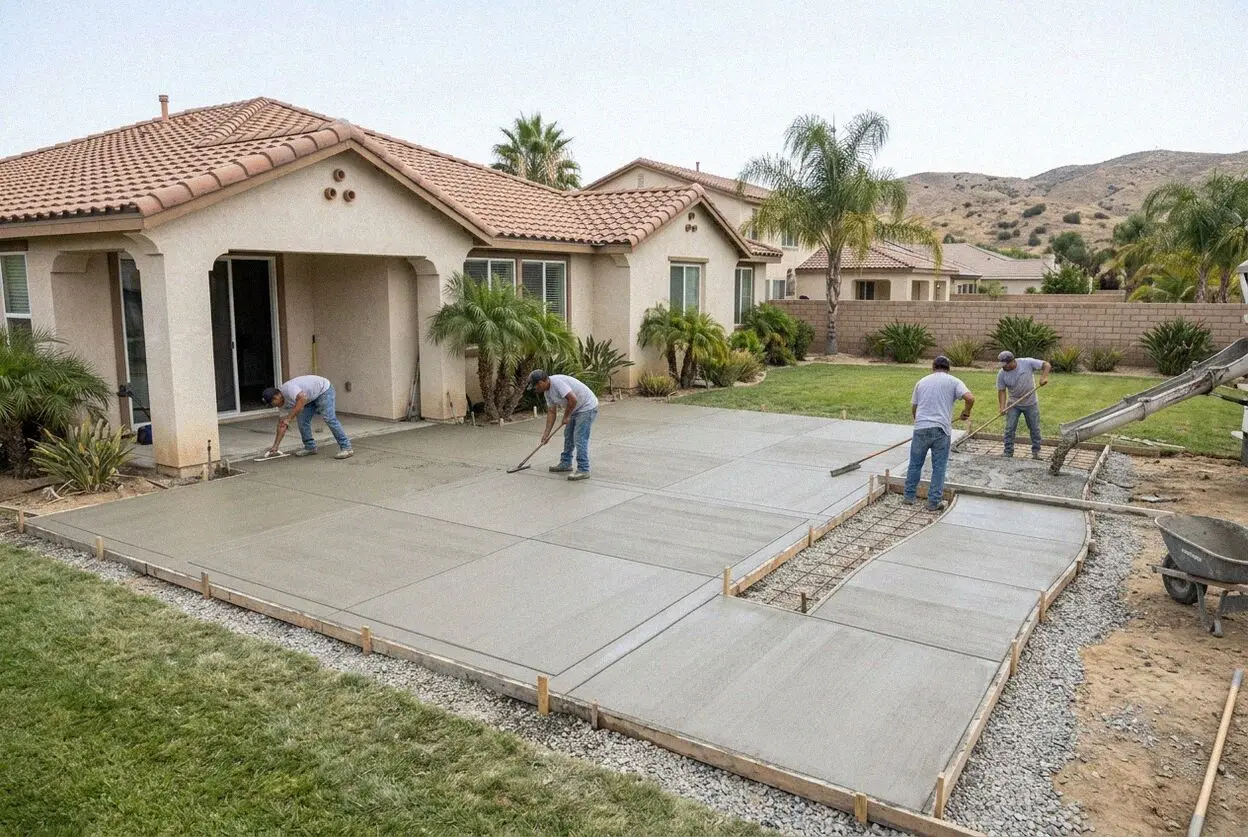
Workers screeding fresh patio concrete at a home in Moreno Valley
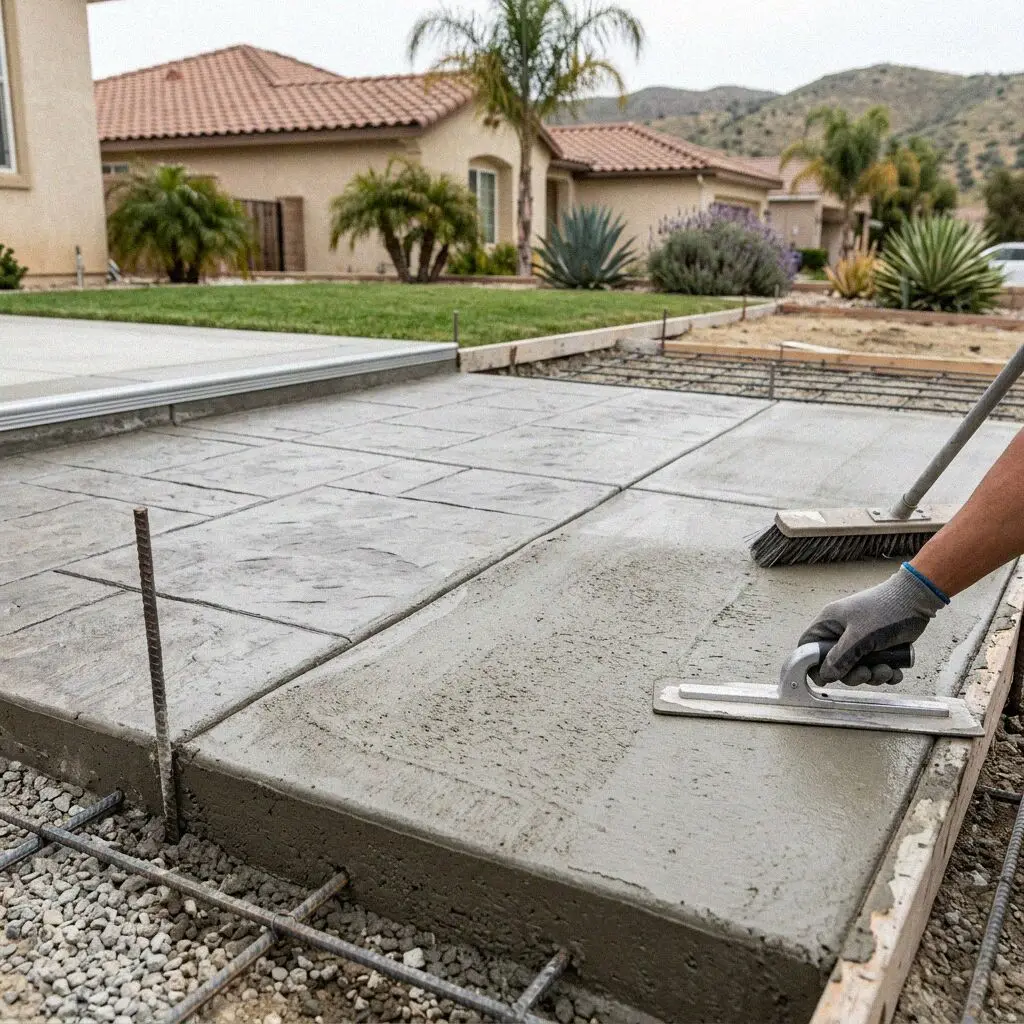
A freshly poured backyard patio slab cured in a Moreno Valley yard

Field Standards

How We Pour Backyard Slabs on Moreno Valley Lots

The USDA Web Soil Survey documents high shrink and swell potential across Moreno Valley, where surface clay expands when wet and contracts into deep fissures under dry summer heat. Slabs poured directly over this native ground crack within two seasons as the subgrade moves unevenly beneath outer edges. We dig down past the loose surface, compact the subgrade, and install four inches of crushed aggregate before any concrete arrives.

Terrence Boyd spent 12 years on concrete crews across the Inland Empire before founding Moreno Valley Concrete Pro in 2022. Every patio project runs under our CSLB C-8 license from the California Contractors State License Board and carries liability insurance on every job. Our crews never guess base depths or pour thin slabs to save time. We frame every patio to a four-inch thickness with steel rebar on eighteen-inch centers.

Control joints are cut at ten-foot intervals to direct concrete shrinkage as the pour cures in dry desert air. The Portland Cement Association confirms that unjointed slabs crack randomly as moisture evaporates from fresh concrete. We tool or saw-cut joints to one-quarter of the slab depth within twelve hours of finishing. This layout keeps expansion lines straight and prevents surface breaks across the patio.

Warning Signs

When is your Moreno Valley patio past repairing?

Wide Cracks Across Slabs

Hairline fissures that widen past one-quarter inch indicate the ground beneath the patio has dropped or shifted. When surface water flows into these gaps during winter storms, it softens the underlying clay subgrade and speeds up settlement across the entire slab footprint.

Uneven Heaving Along Edges

Moreno Valley clay soil swells significantly after seasonal rainfall and shrinks during consecutive 100-degree summer afternoons. This continuous volume swing lifts outer edges by up to two inches when patios lack a gravel base, snapping unreinforced concrete through the center.

Flaking and Surface Spalling

A dusty or crumbling surface often looks like surface wear, but it signals premature moisture loss during the original pour. Rapid summer evaporation weakens the top quarter inch of cement paste. Within three years, surface spalling exposes internal aggregate to rain erosion.

Trip Hazards at House Joints

When a patio slab sinks along the home foundation, it creates an uneven lip that catches footsteps and traps runoff against stucco walls. Over six to twelve months, ponding water seeps beneath the footing, creating foundation movement that costs far more to repair than a patio.

Scope of Work

What Goes Into Every Moreno Valley Patio Pour

Every patio build follows structural standards designed to resist local soil movement, protect home foundations from trapped moisture, and provide a stable outdoor living space that stays level over decades of seasonal weather.

Old Concrete Removal

We break up and haul away broken slabs and surface vegetation, taking all waste to an approved recycling site.

Subgrade Soil Check

We inspect the cleared ground for soft pockets or expansive clay, compacting the subgrade to 95 percent density.

Crushed Rock Base

Four inches of crushed aggregate rock are spread and compacted to isolate the new slab from shifting clay soil.

Structural Mix Pour

We pour 3,000 PSI concrete mixed specifically for regional curing conditions, with 4,000 PSI available on request.

Foundation Expansion

Half-inch expansion joints separate the slab from exterior walls, preventing stress transfer against your home.

Steel Rebar Grid

Grade 60 steel rebar is tied in an eighteen-inch grid and elevated on chairs so reinforcement sits in mid-slab.

Final Site Clearance

Our crew pulls wood forms, backfills slab edges with native soil, and pressure-washes surrounding access walks.

Workmanship Coverage

Every completed patio includes a written workmanship guarantee against defects in how it was built for your property.

Finish Options

Four Ways to Finish a Moreno Valley Patio

Each surface treatment delivers distinct traction, maintenance demands, and heat absorption under Inland Empire summer sun, while every installation shares the same four-inch reinforced base engineered for shifting clay.

OptionLifespanProperty TypeCare RequiredInstallation
Broom Finish Slab30 to 40 years of service lifeBusy backyards needing tractionOccasional washing with hose water2 to 3 days on site
Stamped Concrete25 to 35 years of service lifeSubdivision homes with patio coversResealing every 2 to 3 years3 to 4 days on site
Salt Finish Concrete30+ years of service lifeRanch properties and pool surroundsRinsing and sealing every 4 years2 to 3 days on site
Exposed Aggregate30 to 40 years of service lifeSloped lots needing natural texturePenetrating sealer every 3 years2 to 3 days on site

Material selections and surface treatments are reviewed in person to confirm site slope, sun exposure, and yard drainage during your free property visit.

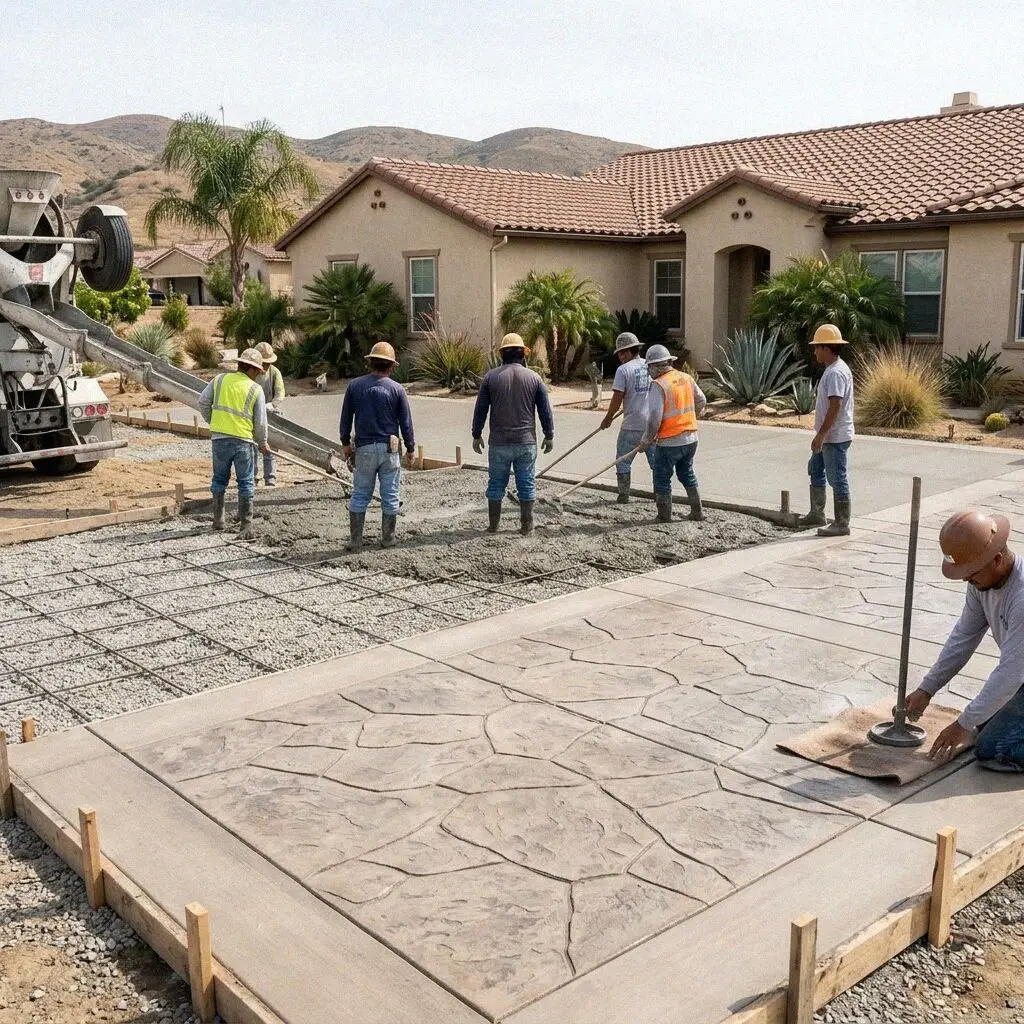
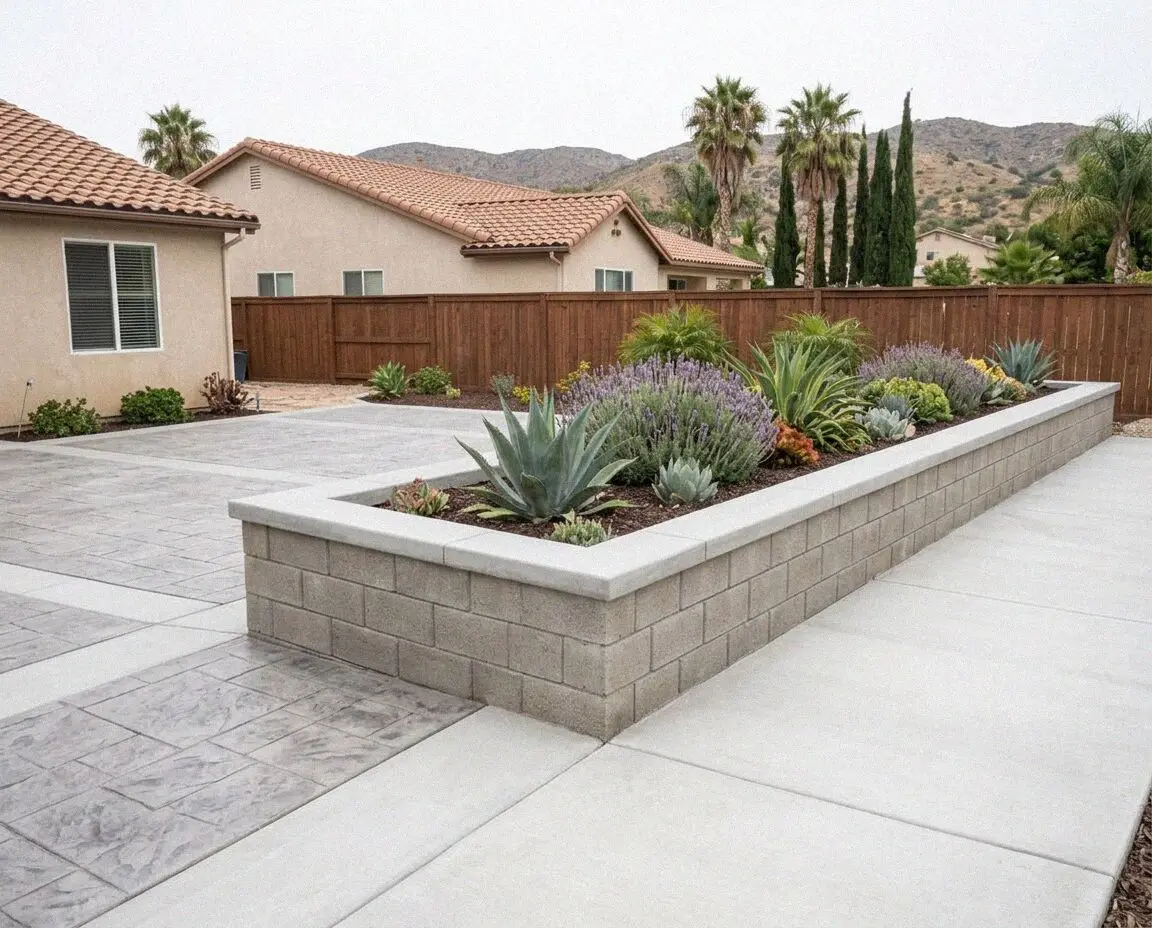
Concrete patio slab curing beside a residential yard in Moreno Valley

Local Ground

Backyard Concrete Challenges in Moreno Valley

Moreno Valley patio slabs face summer temperatures exceeding 100 degrees and clay subgrades that expand by two inches when winter rains saturate Riverside County.

With 60.5% owner-occupied homes and an average household of 4.3 people across Moreno Valley, backyards see intense daily use for family gatherings and outdoor living. Many residential tracts built during past suburban growth feature shallow backyard grading that channels roof runoff straight toward the patio perimeter. When storm water pools beside uncompacted slabs, the native clay absorbs the moisture and exerts upward pressure that lifts unreinforced concrete edges.

Hot desert winds across the Inland Empire cause fresh concrete to lose surface moisture far faster than normal curing rates permit. Without proper evaporation retardants and timed jointing, rapid surface shrinkage produces extensive map cracking before the slab reaches its design strength. We schedule early morning pours during warm summer months, mist the surface as needed, and cut control joints at precise intervals so that slabs cure uniformly without structural fractures.


How We Build

Our Five Stages for Patio Construction

From the initial elevation check to the final walk-through, every stage of construction is planned to ensure proper drainage, structural strength, and clean integration with your home.

1

Initial Yard Survey

We measure your yard boundaries, evaluate soil firmness, and establish slope lines to guide water away from the foundation.

2

Planning and Permitting

You select finishes and layout details while we schedule the project, checking building codes with the Moreno Valley Building Division.

3

Excavation and Subgrade

We remove old sod and failed concrete, inspect subgrade clay, and compact the native earth before spreading crushed rock base.

4

Forming, Steel, and Pour

Crews set wood forms, tie steel rebar on eighteen-inch centers, and pour 3,000 PSI concrete to a true four-inch thickness.

5

Tooling and Final Review

We broom the surface, cut control joints, clean the work area, and conduct a walk-through to confirm all project specifications.

Cost Factors

What Shapes Your Moreno Valley Patio Estimate

We never provide blind quotes over the phone because physical site variables determine exact labor, machinery, and material needs. Here are the primary job conditions that influence the final written estimate.

Single-Family Backyards

Standard rectangular layouts with direct side gate access require minimal grading and standard wheelbarrow mobilization.

Slope and Drainage Needs

Lots with steep grade changes require retaining edges, steps, or supplemental drainage swales to redirect seasonal runoff.

Narrow Side Gate Access

Backyards with tight three-foot gates prevent skid-steer entry, requiring manual wheelbarrow transport that adds labor hours.

Decorative Surface Finishes

Stamped patterns, integral color admixtures, and specialized sealers must be evaluated on site against local sun exposure levels.

Every property requires an in-person assessment of ground conditions, slope lines, and access clearances to calculate an accurate scope. (951) 647-5520 or send us a message.

Schedule Your On-Site Patio Measurement

We inspect your backyard subgrades across Moreno Valley, calculate precise rock base depths, and discuss finish options for your home before providing a quote. Every estimate is measured and written on site

Request a Free Estimate

Written on site · No obligation

By submitting, you agree to our disclosure and consent terms, including being contacted by Moreno Valley Concrete Pro.

Client Reviews

Real Patio Reviews From Moreno Valley Homeowners

Read how our crews handle expansive clay ground, tight residential access, and detailed concrete finishes for homeowners throughout Moreno Valley.

Google review

“Terrence and his crew replaced our cracked 300-square-foot backyard slab in Sunnymead Ranch. They excavated four inches of bad clay, compacted crushed rock, and poured clean broom finish concrete in two days. The patio stayed completely flat through the winter rains.”

R. Delgado, Moreno ValleyConcrete Patio · Google · 2025
Google review

“We had a tight four-foot side gate and an awkward slope in Rancho Belago. The crew moved all base aggregate with wheelbarrows without damaging our block wall. They framed a 450-square-foot stamped patio in three days, and the water now drains away from our foundation.”

J. Okafor, Moreno ValleyStamped Concrete Patio · Google · 2026
Facebook review

“After pouring our 20-by-16 patio, the team returned the following morning to saw-cut joints and pressure-wash the surrounding walkways. They handed over the written workmanship guarantee and walked the entire perimeter with us. Communication was direct from start to finish.”

S. Whitfield, Moreno ValleyBackyard Concrete Patio · Facebook · 2026

Common Queries

Patio Construction Questions in Moreno Valley

Straightforward answers about scheduling, ground preparation, municipal permitting, and curing requirements for concrete patio projects across Moreno Valley.

(951) 647-5520
  • What drives the estimate for a concrete patio?

    Square footage, excavation depth, and property access drive the final estimate rather than a flat rate. Slabs requiring bobcat removal of old structures or extensive grading for drainage demand more equipment hours than clear dirt pads. Soil conditions also matter because expansive Moreno Valley clay requires a full four-inch crushed rock base to prevent seasonal shifting.

  • How long does building a patio take in Moreno Valley?

    A standard backyard patio takes two to three working days from ground breaking to final broom finishing. Excavation and subgrade compaction take day one, while rebar framing, pouring, and finishing occur on day two. Demolition of old masonry or difficult gate clearances can add one day. Foot traffic is safe after 48 hours, while patio furniture should wait seven days.

  • What is included in a Moreno Valley patio build?

    The contract covers complete excavation, base rock installation, steel rebar reinforcement, concrete delivery, surface finishing, and jobsite cleanup. Base compaction and foundation isolation joints are included as core line items rather than extra charges. We also haul all excavation waste away and leave surrounding access paths washed clean before our final walk-through.

  • Does a new backyard patio require a city permit?

    Standard flat-work patios on grade do not require a permit from the Moreno Valley Building Division when there is no overhead roof structure. However, building attached patio covers, retaining walls over four feet, or altering public sidewalk approaches does require municipal review. If your patio project includes structural elements, our team manages the permit filing.

  • When is the ideal time of year to pour a patio?

    Fall and spring offer the most balanced curing temperatures, avoiding midsummer heat spikes and winter rains. While we pour throughout the entire year, pouring concrete during 105-degree summer afternoons requires dawn starts and curing compounds to prevent fast evaporation. Pouring during mild sixty-degree weather gives cement paste maximum time to reach design strength.

  • What warranty and guarantee cover my new patio?

    Every project comes backed by a written workmanship guarantee against defects in how it was built. Ready-mix suppliers also provide manufacturer material specifications certifying concrete compressive ratings. The guarantee protects against construction faults like inadequate base compaction or improperly placed rebar, while excluding normal cosmetic weathering and extreme subgrade earth shifts.

  • Which concrete mixes and equipment do you use?

    We pour 3,000 to 4,000 PSI ready-mix sourced from regional batch plants, reinforced with Grade 60 steel rebar. For subgrade preparation, our crews run mechanical plate compactors to consolidate the four-inch crushed rock base. When access is restricted, we use motorized power buggies rather than heavy tractors to protect your yard turf and prevent damage to residential walkways.

  • Must I be on site while the patio is poured?

    You do not need to stay home during excavation or pouring as long as side gates are unlocked and water spigots are accessible. We ask that vehicles be parked off the driveway to leave street clearance for ready-mix trucks. Our project supervisor remains on site throughout each stage, and you can reach Terrence Boyd directly by phone whenever any questions arise.

Service Reach

Where We Build Patios Around Moreno Valley

Our crews pour residential patios throughout Moreno Valley and neighboring communities across the Inland Empire, providing the same base and steel specifications on every lot.

Show All Areas We Serve

Start Your Moreno Valley Patio Project

We measure yard slopes, inspect subgrade clay depth, and calculate rock base volumes for your new patio. Request an on-site visit to receive your detailed written proposal within 1 business day.